
The practice of meditation tends to expose us to every part of ourselves, even parts we might not be aware of. You might find during your sittings that you start crying for no apparent reason. Or you might also find that you get overwhelmed by particular feelings and emotions, after which the tears are unstoppable.
Meditation brings many deep-seated emotions to the surface of the mind so they can be processed. Experiencing intense bouts of sadness, grief or frustration during a meditation sitting is quite common for most people and is a sign that your practice is progressing. Allow yourself to fully experience these emotions instead of suppressing them.
Crying during your practice is usually a sign that you are shedding a part of your old self, so that you can make room for the new. It’s important that we understand the process here and how to proceed in a skilful way.
Does Meditation (Really) Bring Up Emotions?
We can start crying during meditation for many reasons – it may be from sadness, grief, anxiety, frustration, joy, gratitude or even compassion. It may even be for no apparent reason whatsoever!
When we meditate, we start to calm the mind and heighten our state of awareness. Space opens up between thoughts and, feelings that we have continually repressed through distraction, naturally tend to come into our awareness. Traditionally, we would avoid these feelings whenever they surface by continuing to distract ourselves with whatever our choice of sedative – shopping, (unhealthy) food, Netflix, games, the news or intoxicants to just name a few.
However, meditation allows these suppressed feelings and emotions to emerge from our subconscious in their entirety. Sometimes these feelings can be very overwhelming, especially since we have nowhere to run when we are sitting with our eyes closed on our cushion, and we start crying. Crying is a natural expression of vulnerability and opening up – a letting go, a release – and a perfectly natural state to be in during meditation. So it’s important to remember that this is not a bad thing.
Meditation is a process of getting to know yourself through self-awareness and sometimes this can be difficult. You are confronting what you believe is yourself – this constantly changing deluge of sensations, thoughts and all our self-limiting beliefs. It can be painful to let go of our old selves which might include some long-held beliefs about ourselves and our map of the world. Most commonly, crying is a natural reaction to a perceived loss. However, this type of loss can be extremely liberating and healing if you allow the process to unfold with total acceptance and without any judgment.
How to Deal with Tears or Crying During Meditation
Becoming aware of what’s really happening inside of you is the first step towards healing. Allowing yourself to fully experience your feelings and emotions without any judgment is the second step.
If you start crying during your meditation, for whatever reason, simply watch this process unfold through the physical sensations you feel, as objectively as possible. With your awareness, scan the area of your body where you feel the most pain. Observe the sensations that go along with the pain:
- What exactly are they? Is it more of a pulsing, a throbbing, numbness or a vibration?
- How would you describe them?
- Do the sensations change?
- Do they move around?
- Does the size or shape of the area they cover change?
- Does the epicentre change?
If this is too overwhelming, simply practice a breathing awareness meditation for a little while – staying aware of each in-breath and each out-breath with an inquisitive attitude.

Do not indulge your thoughts, emotions or tears, and do not supress them. Just observe what is happening with a loving and embracing attitude. Be there for yourself as you would for a friend – compassionate but detached from the pain.
This attitude is a skill and just like every skill, takes training. So don’t worry if it is difficult to detach yourself and observe yourself with complete acceptance. All these tears and fuss are our unresolved baggage which we will continue to carry unless we fully embrace it. This is a process of healing for us. Do not expect this healing process to occur in a straight line, where we immediately let go all of our fears. See it as a gradual letting go, a loosening of our grip on the things that hold us back. We continue to fluctuate between the vicissitudes of life, however if we embrace the process, we will continue to oscillate at ever higher frequencies.
Is Crying After Meditation Normal?
There can sometimes be a delayed reaction between our meditation and our emotions coming up to the surface of our minds. Each person is unique so meditation affects us all differently. It’s quite normal to do a sitting in the morning and then a few minutes later, or even a few hours later, just start crying for no explicable reason whatsoever.
Again, this is simply the fruits of your practice. You have shone the light of awareness onto some repressed feeling or emotion and you are now given the chance to let go of it. If you have time, use this feeling as part of a short 2-minute meditation session, watching and noting all the different bodily sensations that go with it. If you are busy, see if you can do this while walking or while waiting for something or someone. Again, if this is too overwhelming, simply practice a breathing awareness meditation for a little while.
It’s also important to remember that you cannot resolve your feelings and emotions through intellectualisation – in other words, thinking about it. There is little merit in trying to think and argue your way out of whichever emotions are making you cry. We try to attach stories and reasons to explain ‘ourselves’, to try and make us feel better.
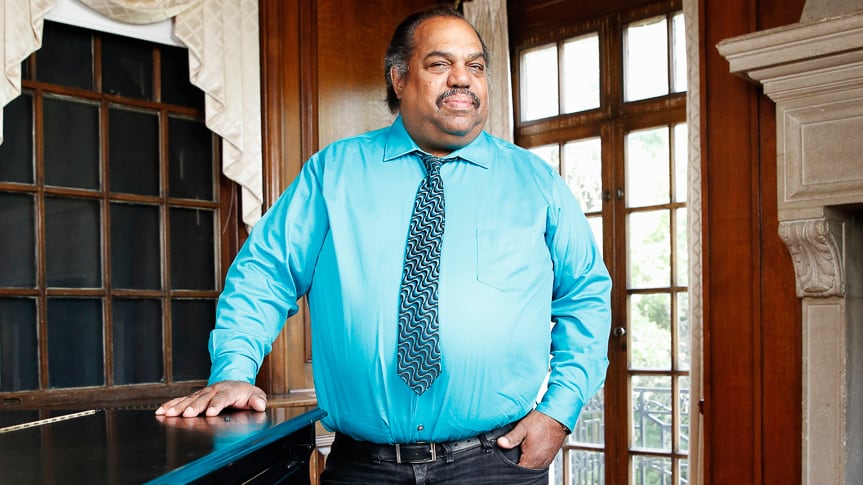
This process can be likened to the story of Daryl Davis – a black R&B and blues musician who travels all over the US south playing his music. Inevitably running into a number of white supremacists, he has convinced over 200 KKK member to give up their robes. How? Well, instead of arguing with them and trying to prove them wrong to change their view, he befriended them. He showed them that African-Americans are just like any other American. He showed them deeply human qualities – kindness, compassion, humour. He gave them experiences contrary to their beliefs, and so these people experienced this new truth. This is what changed them – the experience – not some intellectualisation.
These difficult situations can only be resolved through direct experience of the emotion itself – and actually witnessing that it in actuality has no real power over you. You have the ability to choose your response to how you feel. You cannot teach yourself this through words – it must be experienced.
Can Meditation (Really) Make You Sad?
If you meditate regularly, you may sometimes feel sad for a period during the day without even knowing why. It’s important to remember that this is normal and part of the process for some people. Everyone is different and some of us just have more sadness that needs to be processed. Remember that this state is temporary and will pass away healthily if you just accept yourself as you are in that moment.
If you do end up meditating a lot, and are prone to feeling bouts of sadness, it can sometimes be difficult to deal with some of these deep-seated emotions that get brought up. You might start thinking “oh, this is useless…it’s not working for me…I can’t do this”. You might want to quit, and wonder if you are actually harming yourself.
And this is why it’s important to consider the next question…
Can Meditation Be Dangerous?
The only real disadvantage of meditation is that, just like any other form of meditation or therapy, it can cause deep-seated subconscious issues to rise to the surface of the mind. If one has not developed enough equanimity and balance of mind, it can sometimes be difficult to face these issues and they may linger around for some time.
However, uprooting some of your deeper emotional tendencies can ultimately be a good thing, as you can now deal with it and let it go for good. This is what meditation teaches you. It also teaches us to really get to know ourselves and strike a balance between how fast we want to progress and what we can handle. Meditation has a funny way of throwing challenges at us – and so does life. But usually, the challenges that we face are exactly what we need in that moment.
Nevertheless again, you should be aware that the longer you meditate, the deeper you go, and the deeper you go, the more muck comes up and out of your subconscious. For some, this can be too much depending on where they are at in the developing their equanimity.
If you are meditating and this happens, just note the emotion, and keep coming back to your breath as an anchor. Try your best not to react to it. As with all things, this experience will eventually weaken and fade away.
Why Do I Feel Pain When I Meditate?
The same principle that applies to emotions such as sadness also applies to pain. As you meditate more and more, your awareness of what’s happening inside your body increases. It is not that the meditation has caused the pain, but rather it has made you aware of its existence.
A previously mild pain which was numbed through distraction can now feel more intense. A pain which you were not even aware of at all before can emerge. It’s important to remember that this pain was always there, stored somewhere in your body, and you are now giving it the chance to surface. If you can learn to observe the pain without attachment, and without reacting to it, you will find that it changes and eventually becomes weaker and weaker.
Pain is unavoidable. It is a fact of life. Suffering results from mental and emotional responses to pain. Suffering is optional. We too often create suffering for ourselves by reacting to our pain instead of embracing it.
The pain has no real control over you. You choose your reaction to it – will you respond to it with love and embrace? – or with more suffering?
Stay aware, equanimous and don’t worry – everything is fine, be happy!